
Cutter diameter
Choose a diameter that covers the surface while respecting spindle power, body balance and workholding.
APPLICATION · CAST IRON
Cast iron applications are decided by the grade, graphite condition, surface scale, workpiece width and the cutter body–insert combination. Use this path to move from the job to a quote-ready configuration.
DIRECT ANSWER
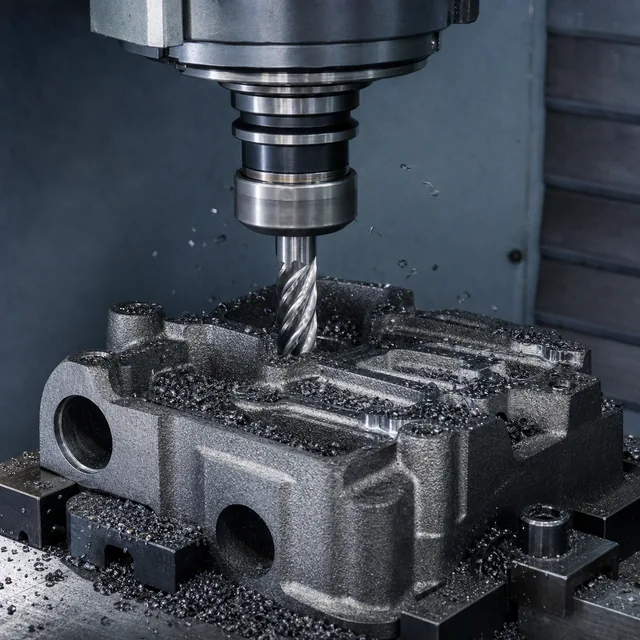
For cast iron, select an indexable face-milling body and matching insert by grade, casting skin, surface width, depth of cut and machine interface. State dry or coolant practice and confirm the complete body–insert–arbor assembly before testing.
QUERY FAN-OUT COVERAGE
| Field | What to record |
|---|---|
| Sample size | No public BOFA sample count is claimed; record the number of faces, passes or test parts used for acceptance. |
| Test environment | Use the production spindle, arbor or bore interface, workholding, dust extraction and coolant practice. |
| Controlled variables | Keep body, insert designation and grade, cutter diameter, depth, width of cut and toolpath revision explicit. |
| Measurements | Record surface condition, edge wear, spindle load, vibration and dust or chip behavior. |
APPLICATION BRIEF
These are selection inputs, not blanket cutting claims. Confirm the exact series chart and the actual machine setup before production.
Gray, ductile and other cast-iron grades. State hardness, casting skin or scale and whether the cut is continuous or interrupted.
Face milling, shoulder work, roughing and surface cleanup. Include workpiece width, stock allowance, depth of cut and target removal rate.
SELECTION CHECKS
Put the following decisions in the same document as the drawing or sample. It keeps engineering, purchasing and quality aligned.
Choose a diameter that covers the surface while respecting spindle power, body balance and workholding.
Confirm insert designation, grade and seating with the cutter body; do not mix a similar-looking insert.
State BT, FMB/FMA, bore or arbor details and gauge length so the complete rotating assembly is checked.
Explain dry cutting, extraction or coolant practice so chip and dust control are included in the recommendation.
PUBLISHED PRODUCTS
PEOPLE ALSO ASK
Answers describe the information needed for a sound decision. They do not replace the tool maker’s chart or a controlled first pass.
Start with the casting grade, surface condition, width, depth of cut and required removal rate. Compare the 445 and 545 families and confirm the insert grade and machine interface with BOFA.
Many cast-iron operations are run dry with effective dust extraction, but the correct practice depends on the machine, material and process. State the current method in the RFQ.
Send the body model, insert designation, grade, cutting direction, cutter diameter and arbor or bore interface. A photo of the current insert marking is useful.
READY TO COMPARE?
Attach the drawing, current tool photo or process notes. BOFA will confirm the series, interface and quotation route.
Open technical RFQ →TECHNICAL SELECTION NOTES
Use these notes to frame a first selection. Final cutting data must come from the exact BOFA series chart and a controlled test on the target machine.
Cast iron varies by grade, graphite condition and casting skin. Start with the body–insert system and the surface width, then confirm the machine interface and dust or coolant practice.
Cast-iron process guidance must include the way chips and dust are controlled at the machine.